Key Points:
- 10.7% increase (nationally) in capital expenditure by business over the year.
- But investment in major categories fell in the June quarter 2026.
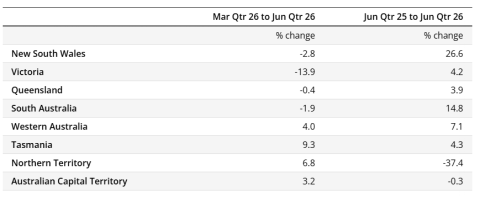
- NSW is the strongest performer among the states and territories over the year, up by 26.6%.
- Data Centre investment is a major driver of CAPEX investment.
Latest ABS CAPEX Data
The scale and shape of a nation’s capital investments today (buildings, structures, equipment, plant & machinery), go a long way to predicting tomorrow’s living standards for everyone.
That is why economists keep a close eye out for one of the key datasets on CAPEX from the ABS - its Private New Capital Expenditure series.
Last week, the ABS released its June quarter numbers, and the headlines were revealing.
Total CAPEX in Australia was down 3.6% in the June quarter ($51bn), but still up a significant 10.7% over the year ($202bn).
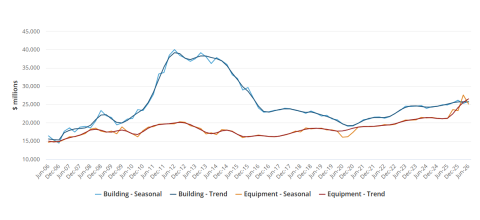
Also, over the quarter, both major investment categories were down - Buildings and Structures (-2.1%) and Equipment, Plant & Machinery (-8.9%).
NSW was the strongest performer of the states, with a 26.6% increase in CAPEX over the year, followed by SA at 14.8%.
When you look behind those headlines, there seemed to be two strong messages from the data.
First, the investment in data centres is powering ahead, rising for an eighth straight quarter.
Investment in Buildings and Structures in the Information & Telecommunications sector is up a massive 64.9% over the past year, and there has been an even bigger jump of 93.5% in Equipment, Plant and Machinery.
Second, the increase in Buildings and Structures investment was driven by spending on large projects in information media and telecommunications (+17.7 per cent) and electricity, gas, water and waste services (+7.8 per cent).
There was additional strength in buildings and structures capex driven by the commencement of several large wind, solar and battery energy storage system projects.
Building and equipment, seasonally adjusted, chain volume measures
State Movements Total CAPEX Seasonally Adjusted Chain Volumes Percentage Change